St. Petersburg, Pinellas County
Fire and smoke damage restoration in St. Petersburg, FL
After a fire in St. Petersburg, call Aftermath Restoration Group at (239) 688-2880, 24/7. We secure openings, stabilize soot before it etches surfaces, and document the loss for your insurer. Licensed and insured, homes and businesses across Pinellas County.
24/7 · Licensed & insured · FL mold license MRSR4195 · ★ 5.0 on Google (21 reviews)
St. Petersburg fire damage: what to expect
St. Petersburg fire calls include kitchen fires, older wiring in historic homes, and saltwater-flooded vehicles and batteries that caught fire after the 2024 surge. Downtown condo towers add smoke movement through corridors and shafts.
St. Petersburg is the largest city in Pinellas County, on the peninsula between Tampa Bay and Boca Ciega Bay. Housing ranges from 1920s bungalows in Old Northeast and Kenwood to waterfront homes on Snell Isle and in Shore Acres to downtown condo towers. Hurricane Helene's surge flooded low neighborhoods like Shore Acres in September 2024.
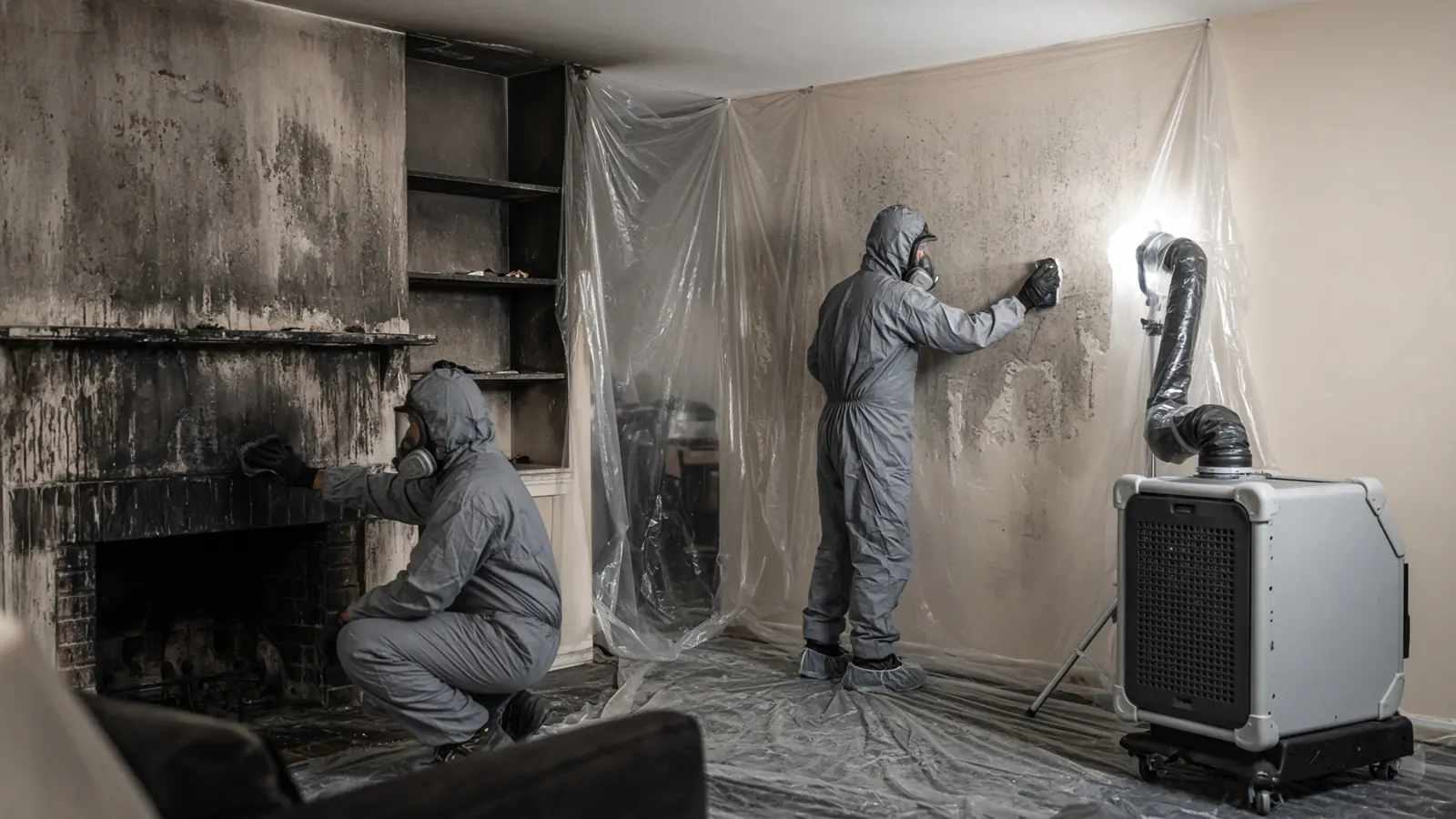
Our fire and smoke process
- Secure the building with board-up so it is closed to weather and entry.
- Extract firefighting water and dry the structure so it does not become a mold problem.
- HEPA-vacuum and chemically clean soot from walls, ceilings, and fixtures.
- Remove charred or smoke-saturated materials that cannot be cleaned.
- Keep a full photo record and written scope for the claim.
Insurance and your claim
Your policy decides what is paid. We give your adjuster photos, a written scope, and a record of board-up and cleanup. We are not a public adjuster and do not take over your claim.
St. Petersburg: local context
About 26% of units are in buildings with 10 or more units, so smoke moves through corridors and shared HVAC. The median home in St. Petersburg was built around 1969 (the Census Bureau's 2018–2022 American Community Survey); older homes often have older wiring and more layers of paint and finish for soot to bond to. The Census Bureau's 2018–2022 American Community Survey puts St. Petersburg at about 259,343 residents. Renters occupy about 37% of homes in St. Petersburg; we can coordinate access with tenants and send documentation to the owner.
Right after the fire
- Do not wipe soot; it smears and etches.
- Keep the HVAC off until it is inspected.
- Stay away from outlets and appliances near the fire or the water.
Also in St. Petersburg
- Water damage in St. Petersburg: extraction, structural drying, and moisture mapping.
- Mold remediation in St. Petersburg: containment, HEPA filtration, and removal under Florida license MRSR4195.
- Storm damage in St. Petersburg: board-up, extraction, and drying after wind and flood.
- Emergency tarping in St. Petersburg: temporary roof cover to stop water until a roofer repairs it.
- Commercial restoration in St. Petersburg: water, mold, and fire restoration for businesses, rentals, and associations.
- All services in St. Petersburg
Close to St. Petersburg
Emergency dispatch
Request a crew
Water, mold, fire, or storm damage. We document the loss for your insurance claim. You keep the claim.
24/7 · Licensed & insured · FL mold license MRSR4195 · ★ 5.0 on Google (21 reviews)
Standing water or an active scene? Call (239) 688-2880 now. We answer 24/7. By sending, you agree we may call or text this number about this loss.
Common questions
Fire and smoke damage restoration questions in St. Petersburg
Can saltwater-flooded batteries cause fires in St. Petersburg homes?
Yes. After surge flooding, some EV and lithium batteries caught fire days or weeks later. Keep flooded vehicles and batteries away from homes if possible. If a fire happens, call 911, then call us for board-up, soot cleanup, and drying.
Who cleans up fire and smoke damage in St. Petersburg?
Aftermath Restoration Group handles fire and smoke restoration in St. Petersburg and across Pinellas County, 24/7. Call (239) 688-2880 for board-up, soot cleanup, odor removal, and drying of firefighting water.
Do you handle commercial fire damage in St. Petersburg?
Yes. We clean soot, remove odor, dry firefighting water, and board up openings for offices, restaurants, and retail spaces in St. Petersburg, 24/7.
Why does soot need to be cleaned quickly?
Soot is acidic. On metal, stone, grout, and paint it starts to etch and stain, and the longer it sits the more has to be replaced instead of cleaned.
Do you clean up the water from firefighting?
Yes. Hose water soaks drywall, insulation, and floors. We extract it and dry the structure along with the soot and odor work, so the fire does not turn into a mold job.