St. Pete Beach, Pinellas County
Fire and smoke damage restoration in St. Pete Beach, FL
Aftermath answers (239) 688-2880 24/7 for fire damage in St. Pete Beach. Board-up, soot and odor work, and drying of firefighting water.
24/7 · Licensed & insured · FL mold license MRSR4195 · ★ 5.0 on Google (21 reviews)
Fire risks in St. Pete Beach
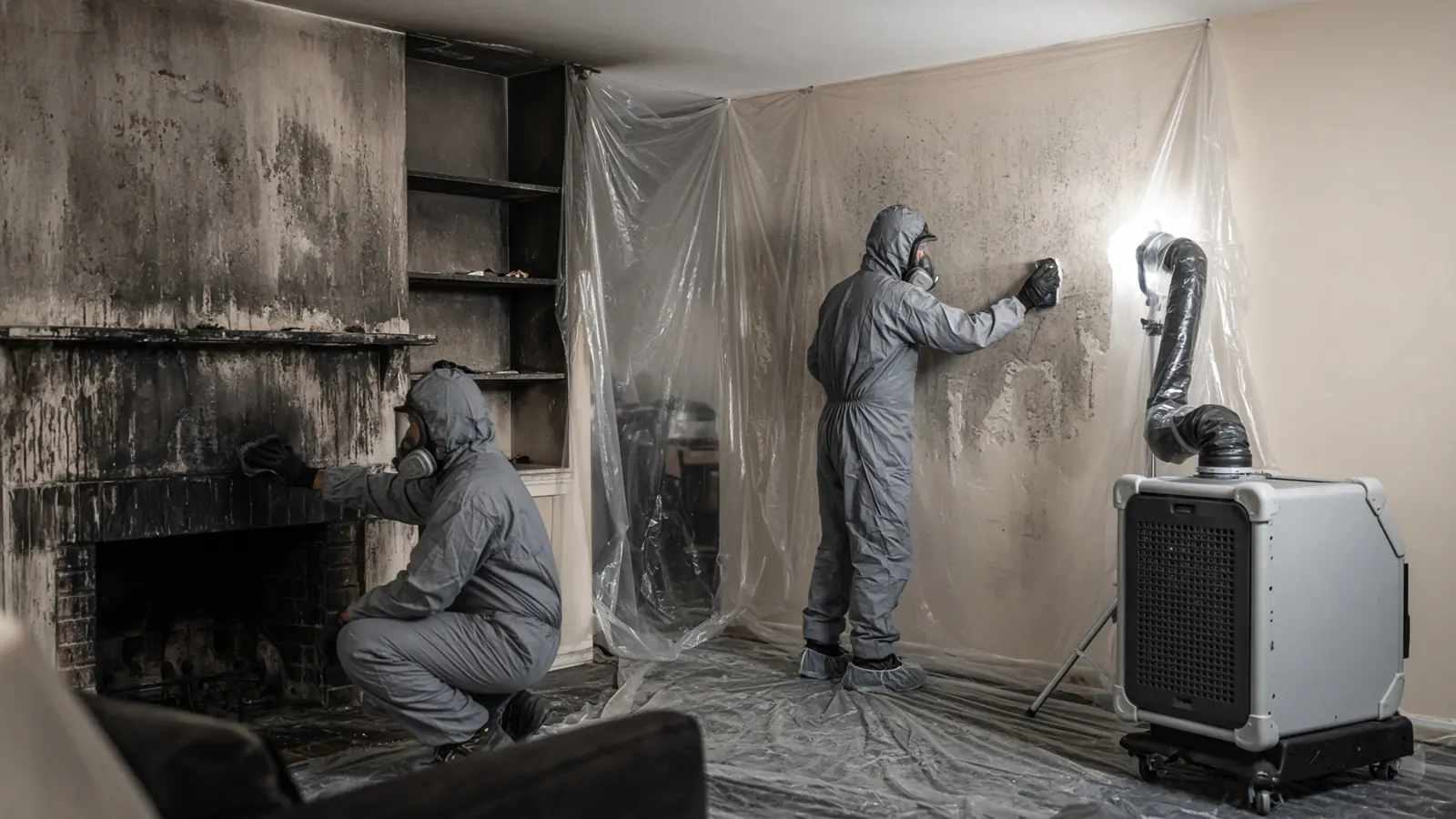
Fire calls in St. Pete Beach often start in the kitchen, laundry room, or garage. After the fire department leaves, the building still needs securing, firefighting water removed, and soot cleaned before it etches surfaces.
St. Pete Beach is a barrier-island city that includes Pass-a-Grille and Upham Beach. Helene's surge in 2024 flooded ground floors across the island. The U.S. Census Bureau's 2018–2022 American Community Survey estimates about 8,905 residents in St. Pete Beach. The median year of construction is about 1972, so a large share of the housing stock predates modern Florida Building Code wind and water standards. St. Pete Beach is on a barrier island exposed to Gulf storm surge and wind-driven rain. Recent hurricanes have pushed water into ground floors and low streets. Condo and multi-unit buildings in St. Pete Beach share walls, ceilings, and HVAC, so one unit's water or smoke often reaches neighbors.
What to do and not do
- Do not wipe soot; it smears and etches.
- Keep the HVAC off until it is inspected.
- Change your clothes and wash your hands after walking through soot.
Local facts that shape the job in St. Pete Beach
The median home in St. Pete Beach was built around 1972 (the Census Bureau's 2018–2022 American Community Survey); older homes often have older wiring and more layers of paint and finish for soot to bond to. The Census Bureau's 2018–2022 American Community Survey puts St. Pete Beach at about 8,905 residents. St. Pete Beach's median age is roughly 62. If a relative or property manager is handling things for you, we send them the same documentation. Location: roughly 7 miles southwest of St. Petersburg in Pinellas County.
Who pays, and who keeps the claim
Most homeowners and commercial policies cover sudden fire and smoke damage, subject to your terms. We document what burned, what smoked, and what got wet from firefighting, and you stay in control of the claim.
What we do after a St. Pete Beach fire
- Secure the building with board-up so it is closed to weather and entry.
- Extract firefighting water and dry the structure so it does not become a mold problem.
- HEPA-vacuum and chemically clean soot from walls, ceilings, and fixtures.
- Clean HVAC components before the system runs again.
- Remove charred or smoke-saturated materials that cannot be cleaned.
Related services for St. Pete Beach
- Water damage in St. Pete Beach: extraction, structural drying, and moisture mapping.
- Mold remediation in St. Pete Beach: containment, HEPA filtration, and removal under Florida license MRSR4195.
- Storm damage in St. Pete Beach: board-up, extraction, and drying after wind and flood.
- Emergency tarping in St. Pete Beach: temporary roof cover to stop water until a roofer repairs it.
- Commercial restoration in St. Pete Beach: water, mold, and fire restoration for businesses, rentals, and associations.
- All services in St. Pete Beach
Nearby cities
Emergency dispatch
Request a crew
Water, mold, fire, or storm damage. We document the loss for your insurance claim. You keep the claim.
24/7 · Licensed & insured · FL mold license MRSR4195 · ★ 5.0 on Google (21 reviews)
Standing water or an active scene? Call (239) 688-2880 now. We answer 24/7. By sending, you agree we may call or text this number about this loss.
Common questions
Fire and smoke damage restoration questions in St. Pete Beach
What happens after a fire in St. Pete Beach?
After the fire department releases the scene, call (239) 688-2880. We board up, extract firefighting water, clean soot, wipe down HVAC components, and treat odor after residue is removed.
Do you clean up the water from firefighting?
Yes. Hose water soaks drywall, insulation, and floors. We extract it and dry the structure along with the soot and odor work, so the fire does not turn into a mold job.
Is fire and smoke damage covered by insurance in St. Pete Beach?
Sudden fire and smoke damage is often covered, subject to your policy. We document the loss with photos and a written scope, and you keep the claim. We are not a public adjuster.
Can smoke odor be fully removed from a St. Pete Beach home?
Only if the residue is removed, not masked. The process is structural cleaning, HVAC cleaning, HEPA filtration, and odor treatment at the end, with ozone used only in unoccupied spaces.
Why does soot need to be cleaned quickly?
Soot is acidic. On metal, stone, grout, and paint it starts to etch and stain, and the longer it sits the more has to be replaced instead of cleaned.