Seminole, Pinellas County
Water damage restoration in Seminole, FL
Aftermath Restoration Group answers (239) 688-2880 24/7 for water extraction and drying in Seminole. We give you an arrival time when you call.
24/7 · Licensed & insured · FL mold license MRSR4195 · ★ 5.0 on Google (21 reviews)
What water damage looks like in Seminole
Seminole homes are mostly single-family block homes from the 1960s to 1980s, plus 55-plus condo and villa communities. Water calls come from aging copper and galvanized lines, water heaters at the end of their life, and storm water in low areas near Boca Ciega Bay and Lake Seminole.
Seminole is a city in west-central Pinellas County, around Lake Seminole and near Boca Ciega Bay and the Gulf beach towns. It is mostly single-family neighborhoods and 55-plus communities.
What the Census says about Seminole housing
The Census Bureau's 2018–2022 American Community Survey puts Seminole at about 19,287 residents. About 34% of units are in buildings with 10 or more units, so one unit's leak often reaches the units below. The median home in Seminole was built around 1979 (the Census Bureau's 2018–2022 American Community Survey); at around 47 years, many original supply lines, shutoff valves, and water heaters are at or past typical service life. About 13% of housing units in Seminole are mobile or manufactured homes, where water gets into subfloors and underbelly insulation fast.
What to do in the first few minutes
- Close the main shutoff if you can reach it safely.
- Turn off power to wet rooms at the breaker if you can do it without standing in water.
- Do not use a household vacuum on standing water.
What we do on a Seminole water job
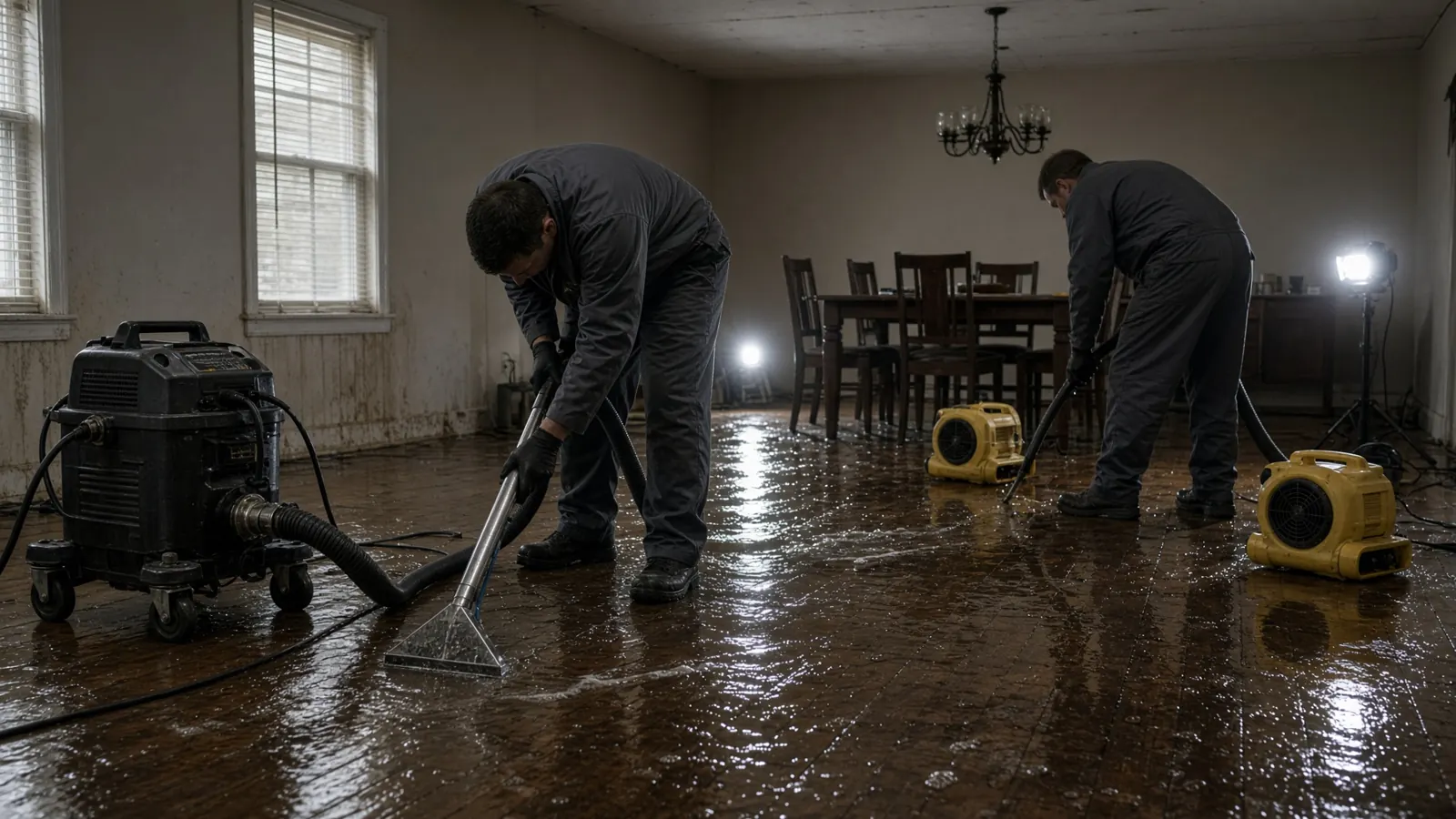
- Make the scene safe first: water stopped, breakers off to wet rooms, trip hazards marked.
- Map moisture in walls, floors, and ceilings with moisture meters, so we know where the water went, not just where it shows.
- Cut out wet materials that will not dry in place, and explain why before we cut.
- Set air movers and dehumidifiers sized to the wet area.
- Come back to take readings until materials reach normal dry levels.
Who pays, and who keeps the claim
Your insurer decides coverage. Our job is the documentation: where the water came from, what got wet, readings each day, and what had to be removed. You stay in control of your claim.
Related services for Seminole
- Mold remediation in Seminole: containment, HEPA filtration, and removal under Florida license MRSR4195.
- Fire and smoke in Seminole: board-up, soot and odor cleanup, and drying of firefighting water.
- Storm damage in Seminole: board-up, extraction, and drying after wind and flood.
- Emergency tarping in Seminole: temporary roof cover to stop water until a roofer repairs it.
- Commercial restoration in Seminole: water, mold, and fire restoration for businesses, rentals, and associations.
- All services in Seminole
Nearby cities
Emergency dispatch
Request a crew
Water, mold, fire, or storm damage. We document the loss for your insurance claim. You keep the claim.
24/7 · Licensed & insured · FL mold license MRSR4195 · ★ 5.0 on Google (21 reviews)
Standing water or an active scene? Call (239) 688-2880 now. We answer 24/7. By sending, you agree we may call or text this number about this loss.
Common questions
Water damage restoration questions in Seminole
What should I do about a burst pipe in my Seminole home?
Shut off the water at the main, turn off power to wet rooms if safe, and photograph everything. Call (239) 688-2880. We extract, dry, and document the loss for your insurer.
Do you handle commercial water damage in Seminole?
Yes. We extract and dry offices, retail spaces, restaurants, and rental units in Seminole, and we can work around business hours when the situation allows. Call (239) 688-2880.
Who do I call for water damage in Seminole?
Call Aftermath Restoration Group at (239) 688-2880. We answer 24/7, give you an arrival time on the call, and handle water extraction and structural drying for homes and businesses in Seminole and across Pinellas County. Licensed and insured.
Will insurance cover water damage in my Seminole home?
Sudden, accidental water such as a burst pipe or supply line is often covered; long-term leaks and rising flood water often are not, unless you have flood coverage. We document the loss for your insurer. You keep the claim.
What if the water in my Seminole home came from outside?
Storm water, surge, and river or street flooding are handled the same way on site: extract, remove what cannot be dried, and dry the structure. Coverage is usually different, so we document outside water separately from plumbing leaks.