Port Charlotte, Charlotte County
After a fire in Port Charlotte: board-up, soot, and odor
Fire and smoke cleanup in Port Charlotte, Charlotte County: call (239) 688-2880, 24/7. Licensed and insured. We document the loss for your insurer.
24/7 · Licensed & insured · FL mold license MRSR4195 · ★ 5.0 on Google (21 reviews)
After a Port Charlotte house fire
In Port Charlotte, fires often start with kitchens, dryers, aging electrical panels, and portable generators run too close to the house after storms. Smoke spreads through ranch-style homes and into attics and ducts.
Port Charlotte is a large unincorporated community on the north side of the Peace River and Charlotte Harbor, across the US 41 bridges from Punta Gorda. It was developed from the 1950s on, and much of it is a grid of single-family homes, many on canals, along the Tamiami Trail, Kings Highway, and the Murdock area.
From board-up to odor treatment
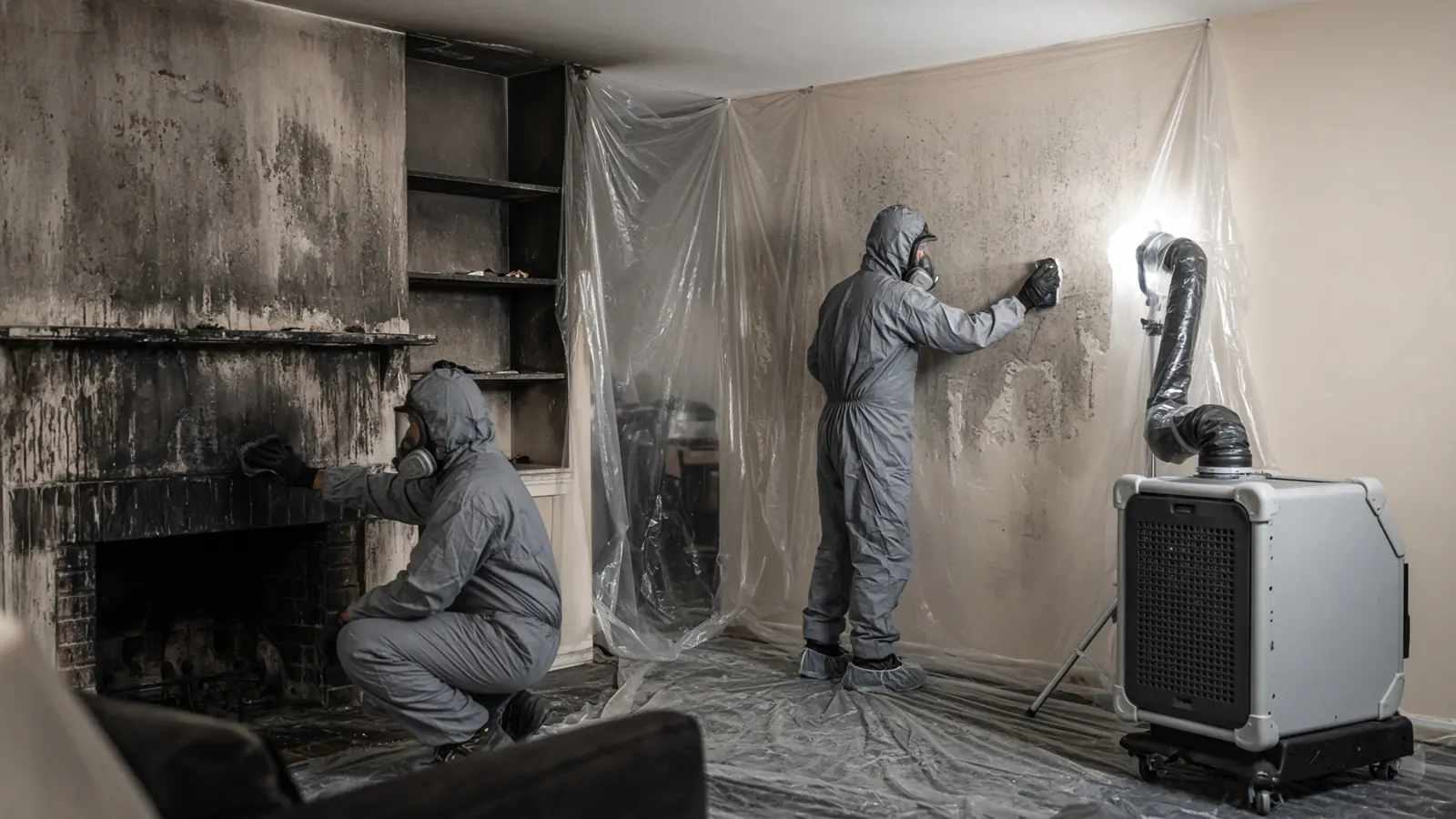
- Board up broken windows and doors and secure the property.
- Extract firefighting water and dry the structure so it does not become a mold problem.
- HEPA-vacuum and chemically clean soot from walls, ceilings, and fixtures.
- Take out burned or heavily smoked materials that will keep smelling.
- Keep a full photo record and written scope for the claim.
Right after the fire
- Leave soot alone. Wiping pushes it into surfaces.
- Stay away from outlets and appliances near the fire or the water.
- Change your clothes and wash your hands after walking through soot.
What the Census says about Port Charlotte housing
Location: roughly 7 miles northwest of Punta Gorda in Charlotte County. Roughly 8% of housing units are held for seasonal or recreational use; owners are often out of state when a neighbor's fire sends smoke into a unit. The median home in Port Charlotte was built around 1983 (the Census Bureau's 2018–2022 American Community Survey); older homes often have older wiring and more layers of paint and finish for soot to bond to. Port Charlotte's median age is roughly 56. If a relative or property manager is handling things for you, we send them the same documentation.
Who pays, and who keeps the claim
Fire, smoke, and soot from a sudden fire are often covered, and securing the property is part of your duty to prevent further damage. We document the loss with photos and a written scope. You keep the claim.
Related services for Port Charlotte
- Water damage in Port Charlotte: extraction, structural drying, and moisture mapping.
- Mold remediation in Port Charlotte: containment, HEPA filtration, and removal under Florida license MRSR4195.
- Storm damage in Port Charlotte: board-up, extraction, and drying after wind and flood.
- Emergency tarping in Port Charlotte: temporary roof cover to stop water until a roofer repairs it.
- Commercial restoration in Port Charlotte: water, mold, and fire restoration for businesses, rentals, and associations.
- All services in Port Charlotte
Close to Port Charlotte
Emergency dispatch
Request a crew
Water, mold, fire, or storm damage. We document the loss for your insurance claim. You keep the claim.
24/7 · Licensed & insured · FL mold license MRSR4195 · ★ 5.0 on Google (21 reviews)
Standing water or an active scene? Call (239) 688-2880 now. We answer 24/7. By sending, you agree we may call or text this number about this loss.
Common questions
Fire and smoke damage restoration questions in Port Charlotte
Can a generator cause a fire or smoke damage after a storm?
Yes. Portable generators run too close to the house can start fires and push exhaust inside. Run them outdoors, well away from doors and windows. If a fire happens, call 911, then call us for board-up, soot cleanup, and drying of the firefighting water.
Do you handle commercial fire damage in Port Charlotte?
Yes. We clean soot, remove odor, dry firefighting water, and board up openings for offices, restaurants, and retail spaces in Port Charlotte, 24/7.
Who cleans up fire and smoke damage in Port Charlotte?
Aftermath Restoration Group handles fire and smoke restoration in Port Charlotte and across Charlotte County, 24/7. Call (239) 688-2880 for board-up, soot cleanup, odor removal, and drying of firefighting water.
Why does soot need to be cleaned quickly?
Soot is acidic. On metal, stone, grout, and paint it starts to etch and stain, and the longer it sits the more has to be replaced instead of cleaned.
Can smoke odor be fully removed from a Port Charlotte home?
Only if the residue is removed, not masked. The process is structural cleaning, HVAC cleaning, HEPA filtration, and odor treatment at the end, with ozone used only in unoccupied spaces.