Fort Myers Shores, Lee County
Licensed mold removal in Fort Myers Shores
Aftermath Restoration Group handles mold in Fort Myers Shores, Lee County, 24/7 under Florida mold license MRSR4195. Call (239) 688-2880.
24/7 · Licensed & insured · FL mold license MRSR4195 · ★ 5.0 on Google (21 reviews)
Mold in Fort Myers Shores: the usual causes
Older Fort Myers Shores homes hold moisture in plaster, wood framing, and crawlspaces differently than modern block homes. Past storm leaks and aging roofs are frequent mold sources.
Fort Myers Shores is a community along the south bank of the Caloosahatchee on State Road 80, east of I-75. The U.S. Census Bureau's 2018–2022 American Community Survey estimates about 5,990 residents in Fort Myers Shores. The median year of construction is about 1977, so a large share of the housing stock predates modern Florida Building Code wind and water standards. Older housing in Fort Myers Shores often has aging supply lines, water heaters, and roofs that have been through several storms.
What not to do with mold
- Do not scrape, sand, or bleach visible growth; it spreads spores.
- Run the AC to cool and dehumidify, but do not point fans at the growth.
- Take pictures of what you see before anything is touched.
Documentation for your insurer
Many Florida policies cap mold coverage. The cause matters: a sudden pipe break is treated differently from a slow leak. We document the source and the work, and you stay in charge of the claim.
Why Fort Myers Shores's housing stock matters here
Location: roughly 8 miles northeast of Fort Myers in Lee County. Renters occupy about 44% of homes in Fort Myers Shores; we can coordinate access with tenants and send documentation to the owner. The median home in Fort Myers Shores was built around 1977 (the Census Bureau's 2018–2022 American Community Survey); older wall assemblies and past storm leaks give moisture more places to hide. The Census Bureau's 2018–2022 American Community Survey puts Fort Myers Shores at about 5,990 residents.
How we remediate mold in Fort Myers Shores
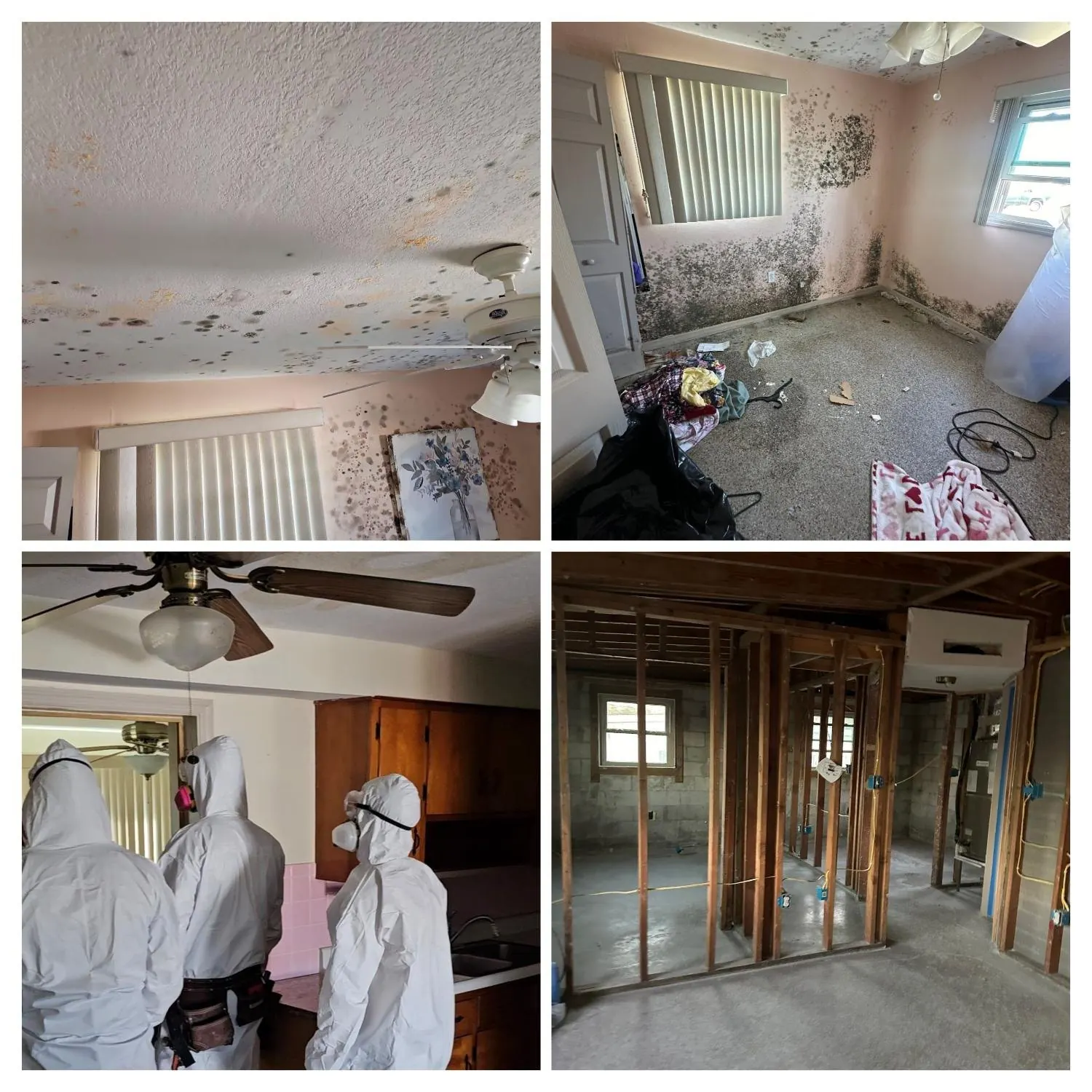
- Inspect and take moisture readings to find the extent of the growth and the water feeding it.
- Remove drywall, insulation, carpet, and other porous materials that cannot be cleaned.
- Clean the remaining structure with HEPA vacuums and wipe-downs.
- Dry the area and point out the moisture source so it can be fixed.
- Photograph each stage so you and your insurer have a record.
Also in Fort Myers Shores
- Water damage in Fort Myers Shores: extraction, structural drying, and moisture mapping.
- Fire and smoke in Fort Myers Shores: board-up, soot and odor cleanup, and drying of firefighting water.
- Storm damage in Fort Myers Shores: board-up, extraction, and drying after wind and flood.
- Emergency tarping in Fort Myers Shores: temporary roof cover to stop water until a roofer repairs it.
- Commercial restoration in Fort Myers Shores: water, mold, and fire restoration for businesses, rentals, and associations.
- All services in Fort Myers Shores
Mold remediation near Fort Myers Shores
Emergency dispatch
Request a crew
Water, mold, fire, or storm damage. We document the loss for your insurance claim. You keep the claim.
24/7 · Licensed & insured · FL mold license MRSR4195 · ★ 5.0 on Google (21 reviews)
Standing water or an active scene? Call (239) 688-2880 now. We answer 24/7. By sending, you agree we may call or text this number about this loss.
Common questions
Mold remediation questions in Fort Myers Shores
Who remediates mold in Fort Myers Shores?
Aftermath Restoration Group remediates mold in Fort Myers Shores under Florida mold-related services license MRSR4195. Call (239) 688-2880, 24/7. We contain the area, run HEPA filtration, and remove affected materials.
Who removes mold in Fort Myers Shores?
Aftermath Restoration Group removes mold in Fort Myers Shores and across Lee County under Florida mold-related services license MRSR4195. Call (239) 688-2880, 24/7. We contain, filter the air with HEPA equipment, and remove affected materials.
Can I stay home during mold remediation?
Often yes, if the work area is contained and away from bedrooms. For large jobs or people with breathing problems, staying elsewhere for a few days may be better. We will tell you after the inspection.
Will the mold come back after remediation?
Not if the moisture is fixed. Mold returns when the leak or humidity problem is still there. We point out the source, and we dry the area before we leave.
Is black mold more dangerous?
Any mold growing indoors should be removed, whatever the color. Color does not tell you the species or the risk. We handle all visible growth the same way: containment, HEPA filtration, and removal.