Desoto Lakes, Sarasota County
Emergency roof tarping in Desoto Lakes, FL
For emergency tarping in Desoto Lakes, Sarasota County, call (239) 688-2880, 24/7. Temporary cover only; a licensed roofer handles permanent repairs.
24/7 · Licensed & insured · FL mold license MRSR4195 · ★ 5.0 on Google (21 reviews)
Roof damage in Desoto Lakes
Summer squalls and tropical systems both tear at roofs in Desoto Lakes. Once it is safe to climb, we cover the opening, board up any broken glass, and start drying ceilings and insulation below.
Hurricane wind and summer thunderstorms reach every street in Desoto Lakes. We board up broken openings, tarp damaged roofs, extract water, and dry the structure. Roof repairs go to a licensed roofer.
Our tarping process
- Photograph the roof damage before it is covered, for your insurer.
- Lay a heavy-duty tarp well past the edges of the damaged section.
- Secure the tarp with battens and fasteners so it stays put in the next blow.
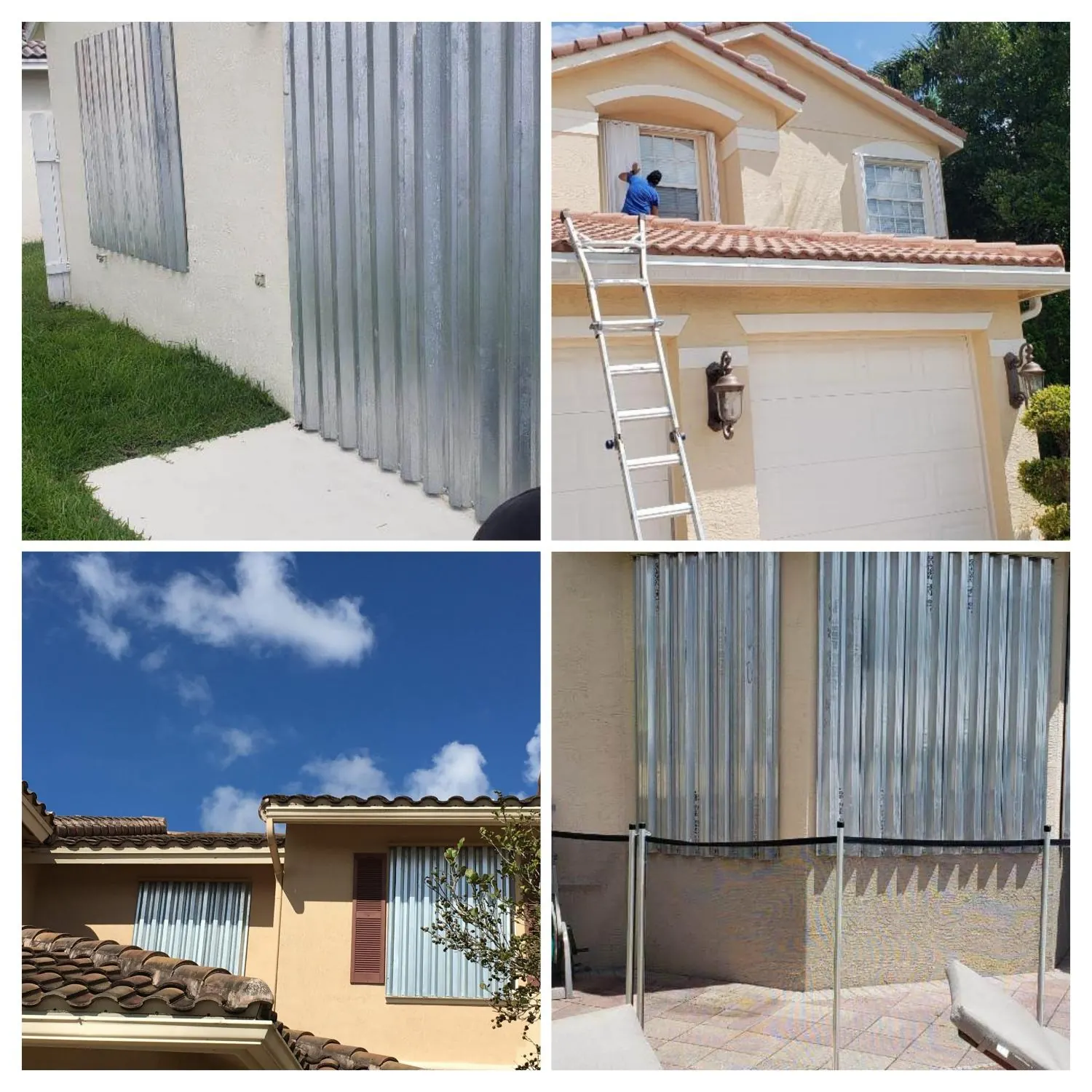
- Close broken openings with metal panels while we are there.
- Leave you a record of what was covered and why.
Claims paperwork
Most policies expect you to prevent further damage after a loss, and an emergency tarp does exactly that. We document the tarp and the damage for your insurer. You keep the claim.
While you wait
- Put buckets under drips and move belongings away from leaks.
- Keep everyone away from bulging or sagging ceilings.
- Photograph the damage from the ground and inside.
Local facts that shape the job in Desoto Lakes
The median home in Desoto Lakes was built around 1974 (the Census Bureau's 2018–2022 American Community Survey); roofs on homes of that age have often been replaced or patched at least once, and older decking can be weaker under a tarp. The Census Bureau's 2018–2022 American Community Survey puts Desoto Lakes at about 1,738 residents. Location: roughly 4 miles northeast of Sarasota in Sarasota County. About 14% of units are in buildings with 10 or more units, so flat and low-slope roofs on larger buildings need a different cover than a house.
More help in Desoto Lakes
- Water damage in Desoto Lakes: extraction, structural drying, and moisture mapping.
- Mold remediation in Desoto Lakes: containment, HEPA filtration, and removal under Florida license MRSR4195.
- Fire and smoke in Desoto Lakes: board-up, soot and odor cleanup, and drying of firefighting water.
- Storm damage in Desoto Lakes: board-up, extraction, and drying after wind and flood.
- Commercial restoration in Desoto Lakes: water, mold, and fire restoration for businesses, rentals, and associations.
- All services in Desoto Lakes
Nearby cities
Emergency dispatch
Request a crew
Water, mold, fire, or storm damage. We document the loss for your insurance claim. You keep the claim.
24/7 · Licensed & insured · FL mold license MRSR4195 · ★ 5.0 on Google (21 reviews)
Standing water or an active scene? Call (239) 688-2880 now. We answer 24/7. By sending, you agree we may call or text this number about this loss.
Common questions
Emergency roof tarping questions in Desoto Lakes
What roof damage do you tarp in Desoto Lakes?
Summer squalls and tropical systems both tear at roofs in Desoto Lakes. Once it is safe to climb, we cover the opening, board up any broken glass, and start drying ceilings and insulation below. We cover the damaged area, fasten the tarp to hold in wind, and dry any water that came inside. Call (239) 688-2880, 24/7.
Does insurance pay for emergency tarping?
Many policies treat emergency tarping as reasonable work to prevent further damage, but coverage depends on your policy. We document the work for your insurer.
Do you tarp commercial roofs in Desoto Lakes?
Yes. We tarp and board up commercial buildings in Desoto Lakes and dry any water that came inside. Call (239) 688-2880.
Do you repair roofs in Desoto Lakes?
No. We tarp the roof to stop water getting in, and we dry the water that already came inside. Permanent roof repairs go to a licensed roofer.
How long can a roof tarp stay on?
A tarp is temporary. It is meant to keep water out until a licensed roofer can repair the roof. After a big storm that can take a while, so we fasten it to hold through wind and rain.