Clearwater, Pinellas County
Mold cleanup for Clearwater homes and businesses
For mold in Clearwater, call Aftermath at (239) 688-2880. Licensed (MRSR4195), insured, and open 24/7 across Pinellas County.
24/7 · Licensed & insured · FL mold license MRSR4195 · ★ 5.0 on Google (21 reviews)
Where mold starts in Clearwater
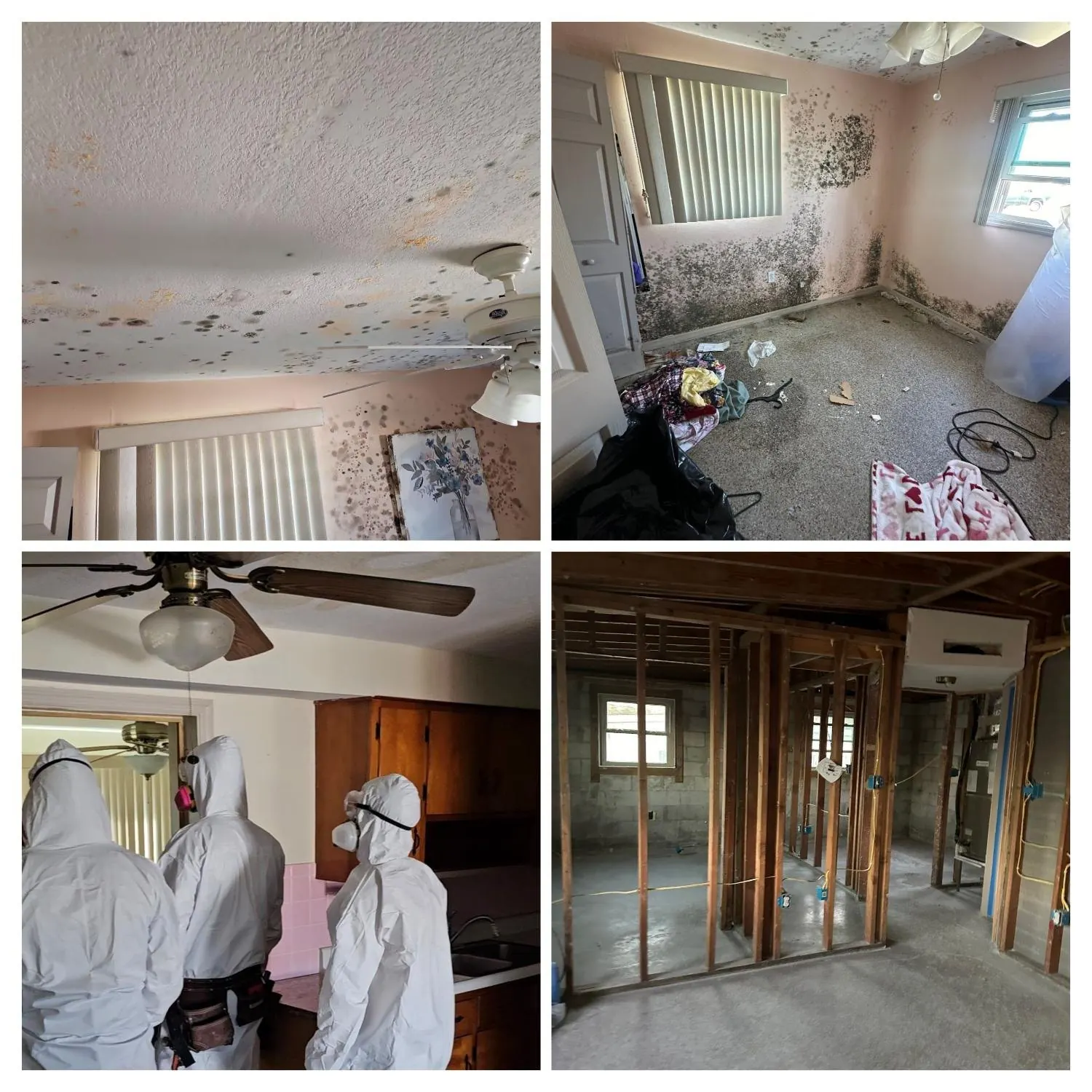
Clearwater's harbor and Gulf humidity, beachfront condos that sit empty between seasons or rentals, and homes that took surge water in 2024 all see mold. We find it behind walls, in AC closets, and in closed-up units.
Clearwater is the Pinellas County seat, on Clearwater Harbor with Clearwater Beach across the Memorial Causeway. Neighborhoods run from the downtown bluff and Island Estates to beachfront condos and the Countryside area to the north.
Insurance and your claim
Mold that follows a covered sudden leak may be covered only up to a mold limit, which is often small. Long-term leaks are often excluded. We document the work for your insurer, and you keep the claim.
Clearwater by the numbers
Roughly 11% of housing units are held for seasonal or recreational use; homes closed up with the AC off or set high are a common mold source. Clearwater is about 17 miles northwest of St. Petersburg. Population: about 116,984 (the Census Bureau's 2018–2022 American Community Survey estimate). About 41% of occupied homes are rented, so landlords, tenants, and managers often share the call and the paperwork.
What not to do with mold
- Stop the water source if you can do it safely.
- Take pictures of what you see before anything is touched.
- Shut the room off from the rest of the house if you can.
What happens on a Clearwater mold job
- Start with an inspection and moisture readings to see how far the growth goes.
- Seal off the work area with plastic sheeting before anything is disturbed.
- Keep HEPA air scrubbers running and the work area under negative pressure.
- Dry what is left and show you the leak or humidity problem that caused it.
- Photograph each stage so you and your insurer have a record.
Other services in Clearwater
- Water damage in Clearwater: extraction, structural drying, and moisture mapping.
- Fire and smoke in Clearwater: board-up, soot and odor cleanup, and drying of firefighting water.
- Storm damage in Clearwater: board-up, extraction, and drying after wind and flood.
- Emergency tarping in Clearwater: temporary roof cover to stop water until a roofer repairs it.
- Commercial restoration in Clearwater: water, mold, and fire restoration for businesses, rentals, and associations.
- All services in Clearwater
Neighboring communities
Emergency dispatch
Request a crew
Water, mold, fire, or storm damage. We document the loss for your insurance claim. You keep the claim.
24/7 · Licensed & insured · FL mold license MRSR4195 · ★ 5.0 on Google (21 reviews)
Standing water or an active scene? Call (239) 688-2880 now. We answer 24/7. By sending, you agree we may call or text this number about this loss.
Common questions
Mold remediation questions in Clearwater
Why does mold grow in closed-up Clearwater condos?
High humidity and the AC off or set too warm lets moisture condense on surfaces. Mold grows on walls, cabinets, and furniture. We contain, remove affected materials, HEPA-filter, and help identify the moisture source. Florida mold license MRSR4195.
How long does mold remediation take in a Clearwater home?
A small closet or bathroom can be done in a short visit; a larger area with wall and ceiling removal takes longer. We give you a scope after the inspection, before work starts.
Do you remediate mold in Clearwater businesses and rentals?
Yes. We handle mold in offices, retail spaces, restaurants, and rental units in Clearwater under Florida license MRSR4195. Call (239) 688-2880.
Who removes mold in Clearwater?
Aftermath Restoration Group removes mold in Clearwater and across Pinellas County under Florida mold-related services license MRSR4195. Call (239) 688-2880, 24/7. We contain, filter the air with HEPA equipment, and remove affected materials.
Is black mold more dangerous?
Any mold growing indoors should be removed, whatever the color. Color does not tell you the species or the risk. We handle all visible growth the same way: containment, HEPA filtration, and removal.